


.png)
Obama’s Silence on Islamic Republic’s Killings Highlights His Complicated History with Iran
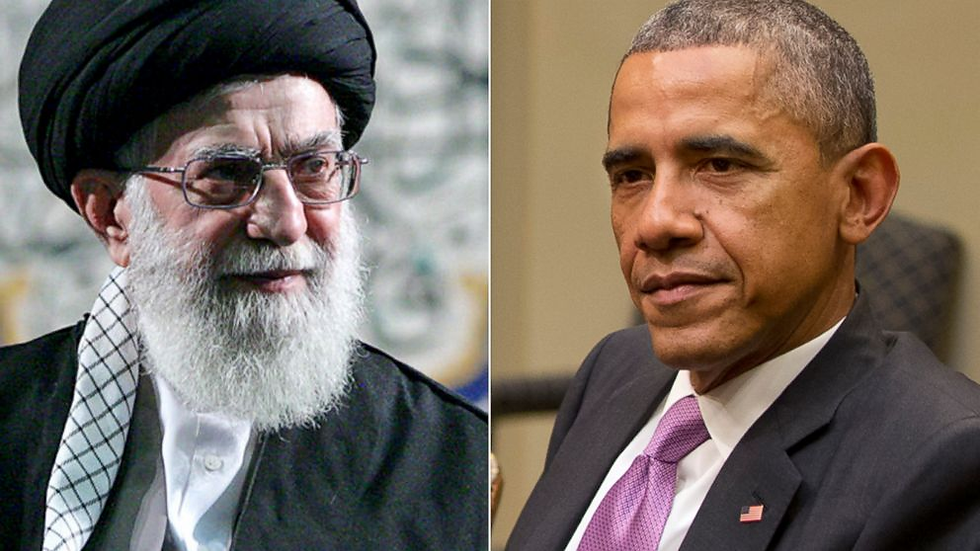
From his failure to support civilians in 2009 to the Iran nuclear deal—which critics still see as ransom payments to a tyrannical government—Obama has had a controversial track record dealing with Khamenei and the ruling regime.
Iran has erupted in one of the largest waves of unrest since the Mahsa Amini protests in 2022, and possibly the most significant since the 1979 revolution that overthrew the shah and installed the current Islamic Republic.
Beginning in late December 2025, a series of demonstrations have spiraled into mass anti-government sentiment calling explicitly for the end of the Islamic Republic with protests in all 31 of Iran’s provinces. In response, the regime and its leaders are cracking down on protestors—doing so with live ammunition, vehicles, drones, and other heavy weapons against unarmed demonstrators.
The full extent of the death toll and human rights violations is unknown, given that the Iranian regime has shut down Internet services across the country. But at least 572 have been killed. Untold thousands have been arrested. Hospitals are overwhelmed and streets are “full of blood.”
“They’re charging at crowds in vans and bikes,” said a 28-year-old journalist from Mashhad named Maha. “I have seen them slowing down and deliberately shooting at people’s faces. Many have been injured. The streets are full of blood. I fear I am about to witness a sea of dead people.”
"Things here are very, very bad," a source in Tehran told the BBC. "A lot of our friends have been killed. They were firing live rounds. It's like a war zone, the streets are full of blood. They're taking away bodies in trucks."
Supreme Leader Ayatollah Ali Khamenei initially said he would "not back down."
That changed this week when President Trump called for the Iranian government to end the killing of its own citizens, threatening U.S. military intervention. If Iran were to retaliate against the U.S., Trump promised that “we will hit them at levels that they’ve never been hit before.”
Allegedly, Iran’s leaders are taking that threat seriously and now want to negotiate. This is a positive development for all sides of the conflict and may save countless lives.
It’s worth contrasting the current President’s stance on Iran with former President Barack Obama, who has yet to issue any sort of statement in support of the people of Iran. Obama is no stranger to using his various platforms—including his Twitter/X account with a staggering 118 million followers—to champion social issues and condemn violence. He did so most recently in November when two members of the National Guard were shot by an Afghan national in Washington D.C.
So far, nothing on Iran. For many, Obama’s reticence feels inconsistent with the United States’ —and his own—professed commitment to human rights.
That sentiment is only amplified when placed alongside Obama’s controversial legacy on Iran.
One of the most contentious elements of Obama’s engagement with Iran during his presidency was the Iran nuclear deal, formally known as the Joint Comprehensive Plan of Action (JCPOA). As part of diplomatic negotiations, the U.S. delivered $400 million in cash to Iran, transported on pallets aboard unmarked aircraft. The administration also “took steps to withhold from lawmakers the details… and [continued] to rebuke inquiries from Congress for information about how another $1.3 billion in taxpayer funds was awarded to the Islamic Republic.”
While the administration argued this was to settle a longstanding legal claim and facilitate the release of detained Americans, critics labeled it a de facto ransom payment to a regime that sponsors terrorism.
Whether one agrees with the diplomatic calculus or not, this history helps explain why some see Obama as less eager to champion popular resistance against the Islamic Republican today.
Prior to that, Obama took heat for not supporting an Iranian civilian uprising in 2009 that could have seen the country’s ruling mullahs overthrown. When asked about this recently on a podcast run by former aides, Obama revealed he believed this was “a mistake” on his part.
“When I think back to 2009, 2010, you guys will recall there was a big debate inside the White House about whether I should publicly affirm what was going on with the Green Movement, because a lot of the activists were being accused of being tools of the West and there was some thought that we were somehow gonna be undermining their street cred in Iran if I supported what they were doing. And in retrospect, I think that was a mistake.”
“Every time we see a flash, a glimmer of hope, of people longing for freedom, I think we have to point it out,” he added. “We have to shine a spotlight on it. We have to express some solidarity about it.”
Why, then, does the former President not “shine a spotlight” on the current “people longing for freedom?”
Regardless of Obama’s inaction, Israeli officials continue to place their faith in the current administration to defend against—or proactively discourage—any attack on Israel itself. Israel intelligence allegedly believes the Iranian regime will either be toppled under pressure or, in order to survive, they will “implement a series of reforms aimed at appeasing the public—including greater flexibility on the nuclear issue—in an effort to lift the international sanctions that are weighing heavily on its economy.”
The Israeli Defense Force (IDF) itself currently has “no offensive intentions” in Iran but is “prepared for any surprise.”
“Iran is looking at FREEDOM, perhaps like never before. The USA stands ready to help,” Trump said in a recent Truth Social post.


Comments